Every long-haired cat owner knows the discovery: you are petting the cat, everything feels fine, and then your fingers find it, a dense, flat lump close to the skin that definitely was not there last month. Or was it? Mats are masters of concealment, forming under a smooth-looking topcoat, and they grow by a process that never pauses. Understanding what a mat actually is explains both why groomers take them so seriously and why the internet's favorite home remedies so often end at the vet.
How a mat forms, and why it tightens itself
It starts with loose undercoat, the soft downy hair cats shed continuously. When that loose hair is not combed out, friction from movement, a collar, a favorite sleeping spot, wraps it around the attached hair. Add a little moisture, from humidity, a water bowl beard, or the cat's own grooming, and the wrapped hairs begin to felt, the same process that turns wool into fabric. Felting is one-directional: movement tightens it, and nothing about ordinary life loosens it. The mat grows at its edges, recruiting more loose hair, and migrates closer to the skin as it compacts. Charlotte's humid summers accelerate the whole cycle, which is why groomers here see the worst pelts in August and September.
The locations are predictable because the causes are: behind the ears, where collars rub and owners scratch; the armpits and inner thighs, where legs move against the body; the belly, which collects loose hair and is the region cats least allow to be combed; and along the back of senior cats whose tongues no longer reach.
- Find the real extent. Run your hands, not just your eyes, over the back, belly, armpits, and behind the ears; mats hide under smooth topcoat.
- Test with a comb. If a metal comb cannot be drawn gently down to the skin in an area, that area is past home repair.
- Do not cut with scissors. Cat skin tents up into mats, and scissor cuts to the skin are the most common home grooming injury.
- Book the groomer and say the word matted. Matted cats need longer appointments and sometimes a clip instead of a comb-out.
- Restart with a schedule. After the reset, comb to the skin a few minutes several times a week, or book maintenance grooms on a fixed rhythm.
Why mats are a welfare issue, not a cosmetic one
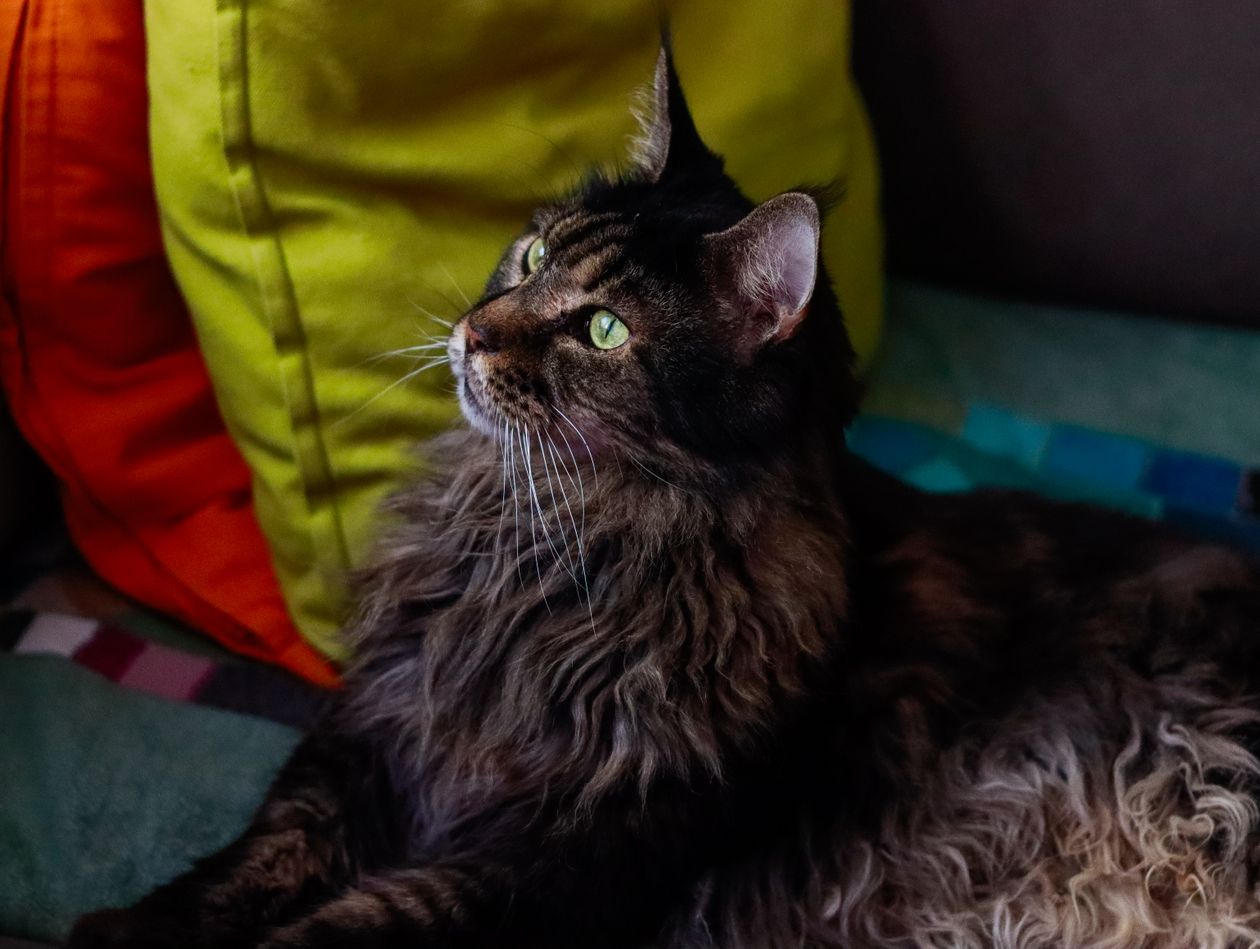
A mat does not rest on the skin. It hangs from it, by thousands of hairs, and pulls every time the cat walks, jumps, or lies down. Cats are famously quiet about discomfort, but the signs show up in behavior: the cat who stops jumping to a favorite perch, who objects to being touched in a spot she used to love, who grooms frantically at the mat's edges or gives up grooming altogether. Under a heavy pelt, the skin gets no air, stays damp, and can develop sores and infections that nobody sees until the coat comes off, which is one of the less pleasant surprises in grooming. This is why a groomer who finds pelting will call it urgent rather than ugly.
Why pulling and scissors both fail at home
The instinct to work a mat out with fingers or a brush runs into physics: felted hair does not release strand by strand, so the force goes into the skin instead, and cats vote on this with their teeth. The instinct to slide scissors under the mat is worse. Cat skin is thin and loose, and it tents upward into the base of a mat, so the fold of skin sits exactly where the scissors go. Emergency vets know this injury well because it is the most common home grooming wound they stitch. The safe home tool is a metal comb used as a test, not a rescue device: if it glides to the skin, you are maintaining; if it stops, the area belongs to a professional with clippers, where the blade passes flat against the skin and removes the mat without tension.
At the appointment, a groomer at a cats-only facility like Feline Fabulous will assess how much of the coat can be saved. Loose, recent mats sometimes split and comb out with patience and the right tools. A pelted coat comes off, usually as a lion cut or a shorter all-over clip, and the honest framing is that this is a rescue, not a style choice. Either way the cat leaves comfortable, which is the metric that matters.

The routine that prevents the sequel
Prevention is measured in minutes. A metal comb, down to the skin, a few minutes at a time, several times a week, beats a monthly half-hour battle the cat hates. Comb the trouble zones on purpose: ears, armpits, belly, rear. Short sessions tied to something the cat likes, a meal or a lap session, build tolerance better than rare marathons. For cats who simply will not be combed, and they exist, the prevention is a calendar: standing grooming appointments every six to eight weeks, or a shorter maintenance cut that reduces the coat to a length the cat's lifestyle can support. There is no third option where the coat maintains itself, and every groomer has met the cat who proved it.
Common questions
Can I cut a mat out with scissors if I am careful?
Please do not. Cat skin tents up into the base of a mat, so the skin sits right where the blades close, and this is the most common home grooming injury vets treat. Clippers at a groomer remove mats flat against the skin with no pulling and no guessing.
How do I know if my cat's mats are serious?
Use the comb test. If a metal comb cannot pass gently down to the skin, or you feel flat, dense areas close to the skin across the belly, back, or armpits, the coat is past home repair and needs a professional assessment.
Why did my cat mat so fast this summer?
Humidity and shedding peak together. Loose undercoat plus Charlotte's moist summer air felts quickly, especially in the friction zones. More frequent combing in summer, or a de-shedding groom early in the season, keeps ahead of it.
Photos in this guide are representative stock images.
← All guides from Feline Fabulous← Back to Feline Fabulous